Article
29 April 2026

Meet Bill Smith and Mak: Small Bears Doing Big Work
Two teddy bears back to back on a chair

For children who experience the world as unpredictable or overwhelming, regulation often starts with something soft, familiar, and non-judgmental.  At first glance, Bill Smith (right) and Mak (left) look exactly like what they are: two teddy bears.

But in our school, these small bears do big things.  

One of the biggest transitions our children make is from home to school when they first join us. Many of the children have found education difficult previously, and schools can be challenging places for a variety of reasons. 

The bears help children that struggle with emotional regulation, communication, and change to make sense of their inner world - and to connect with the outer one - in ways that feel safe, manageable, and human. 

Meet the Bears 

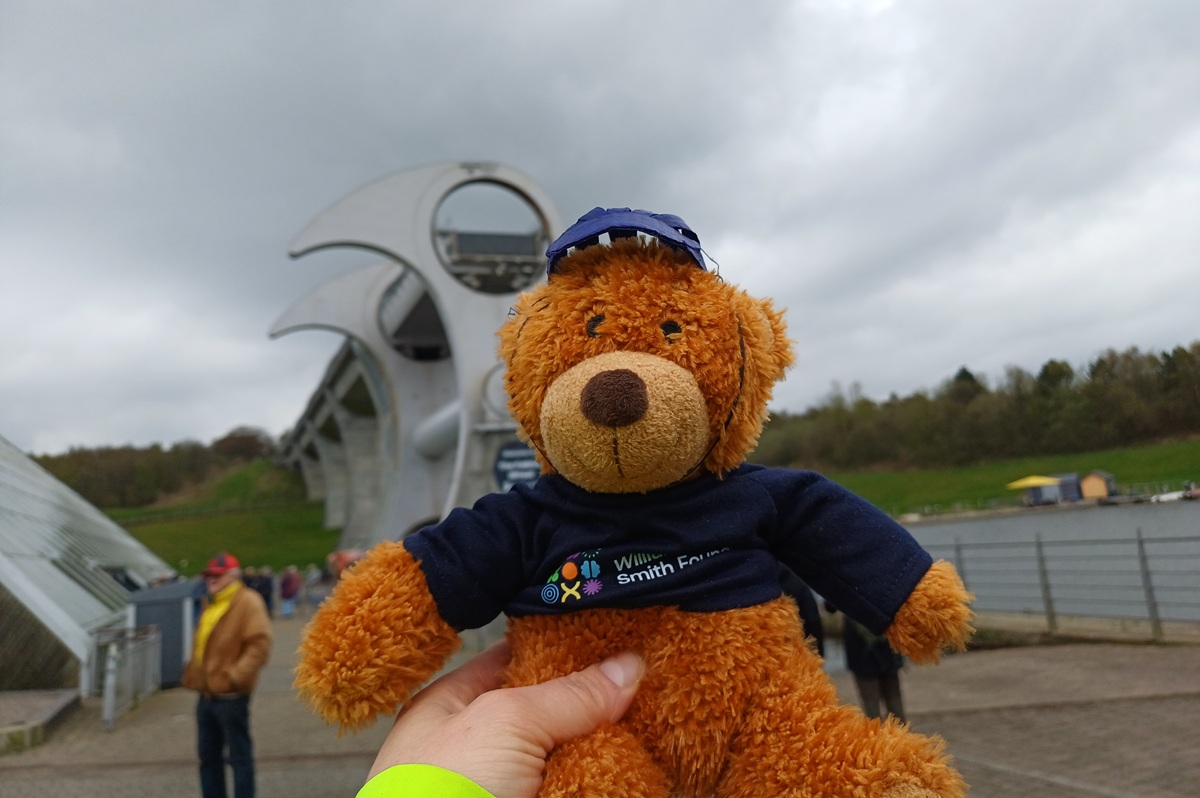
Bill Smith is our branded adventurer. He’ll be popping up everywhere - classrooms, corridors, outdoor spaces, coast to coast bike rides (see below) - moments of calm and moments of crisis.  

Bill can help our children to hold home or school in mind when they are new to the Foundation, as he travels with them back and forth each day.  

Bill can also help our children to 'tell' staff and family members about what they have been learning or doing each day in playful ways which take the pressure off verbal communication. 

latest-information-bill-smith-adventure-1200x800.jpg
Bill recently joined the Coast to Coast Bike Ride Team, pictured above at Stirling Bridge

Mak is our Makaton bear. He helps boys with practising communication, using signs and gestures, supporting students whose spoken language is limited or unavailable at times. Mak gives shape to feelings and thoughts that can be hard to put into words, especially when emotions are high.  

The Theory Behind the Bear: Winnicott’s Transitional Object 

Our use of the bears is grounded in the work of psychoanalyst Donald Winnicott, who introduced the concept of the transitional object and transitional space. Winnicott proposed that children use transitional objects - often teddy bears or soft toys - to bridge two worlds: 

  • The inner world: feelings, fears, imagination 

  • The outer world: people, change, reality 

The transitional object exists somewhere safe in the middle.  Children can explore feelings, relationships, and experiences without becoming overwhelmed.  In our school, we use the bears as transitional objects to support communication, emotional expression, regulation, and change.  

They provide a concrete, emotionally safe medium for students to externalise feelings, navigate transitions, and develop emotional understanding within relationships. 

How Mak the Bear works in practice 

1. Mak as a transitional object 

Mak holds emotional meaning for our students. He represents safety, continuity, and predictability. Importantly, he can carry feelings that a student cannot yet express themselves. This is especially important in our Makaton group because: 

  • Some students’ spoken language is limited 

  • Abstract emotions are hard to symbolise 

  • Mak has become a familiar, concrete part of sessions 

2. Mak as a third voice 

Mak also acts as a third voice in the room. Instead of adults asking direct questions - which can feel threatening or demanding - the bear “speaks” instead: 

  • The bear feels worried 

  • The bear feels sad 

  • The bear asks for help 

For example: “Mak the Bear feels sad today.” 

This approach reduces pressure and allows students to think about feelings at a safe distance. They are not being put on the spot - they are invited into reflection. Through the bear, boys often tell us far more than they can tell us directly. 

3. Supporting transitions 

The word transitional is key. Mak supports our children through all kinds of transitions, including: 

  • Moving from one activity to another 

  • Emotional shifts (calm → anxious, excited → overwhelmed) 

  • Life changes (new class teacher, new supporting staff, new Makaton QOL space, school holidays, session endings) 

In a world that can feel unpredictable, the bear stays constant while everything else changes. That continuity matters. It provides reassurance, containment, and a sense of stability when change feels hard. 

Soft Things, Serious Work 

Bill Smith and Mak are not rewards. They are not distractions. They are not “just toys.” 

They are relational tools - grounded in psychological theory and trauma-informed practice - helping our children practise emotional awareness, communication, and regulation in ways that feel safe. 

And that’s why, in our school, small bears really do big things. 🧸  #MakTheBear

SHARE

  • Related Posts